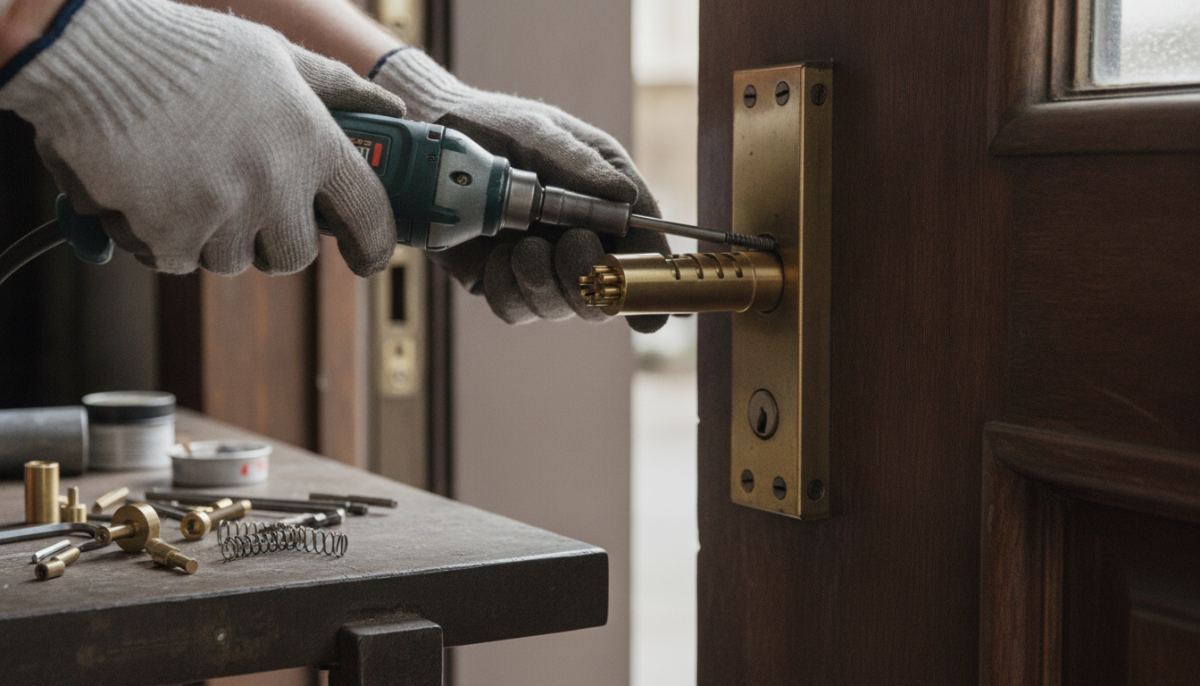
What is an Electric Vending Tubular Barrel and How is it Mounted?
What is an electric automatic tubular cylinder, how does it work, and how is it installed? A step-by-step installation guide and expert recommendations for apartment and building entrances.
To ensure physical security and seamless controlled access at building entrance doors, locking mechanisms must be carefully selected. Among the mechanical parts most frequently preferred for heavy pedestrian traffic at apartment, business center, and housing complex entrances is the electric automatic tubular cylinder. Featuring a tail and body structure distinct from standard lock cylinders, these cylinders ensure the flawless operation of electric automatic locks driven by intercom systems or button triggers.
Serving as the bridge between the door closer/automatic mechanism and the physical key mechanism, these cylinders can cause the entire entrance door to jam or remain unlocked if installed incorrectly or made from low-quality materials. In this guide, we examine in detail the basic structure of the electric automatic tubular cylinder mechanism, its installation steps, technical details to watch out for, and maintenance methods for long-lasting use.
What is an Electric Automatic Tubular Cylinder and How Does It Work?
An electric automatic tubular cylinder is a special type of cylinder designed to be compatible with rim locks and electric door automatics found in areas such as apartment doors, fire exits, or main building entrances. Its most distinct feature from classic cylinders is the pipe (tube)-shaped mechanical spindle extension located at the back of the cylinder, which reaches directly into the trigger mechanism of the door automatic. This pipe mechanism physically pulls back the latch of the automatic when the key is turned, enabling the lock to open.
The working principle offers two-way flexibility. When an electrical signal is sent to the door automatic from inside an apartment or via a button, the coil mechanism drops the pin to open the door. When using a key from the outside, the pin alignment inside the tubular cylinder rotates, and the pipe tail transfers the rotational force to the lock's internal mechanism, allowing the door to be released mechanically without requiring electricity. This ensures uninterrupted building access even during power outages.
Brass or high corrosion-resistant alloys are generally used in body production. Because it is exposed to harsh outdoor conditions, rain, moisture, and continuous key insertion and removal, the wear resistance of the internal pins and springs directly determines its mechanical lifespan.
Why Choose a Tubular Cylinder for Building and Facility Security?
In apartment and multi-family housing projects, door locks are opened and closed hundreds of times a day. Standard cylinders do not possess a spindle structure suited for such high-cycle mechanical stress and electrical triggering. Tubular cylinders, on the other hand, are designed to withstand heavy-duty operating conditions. This clearly highlights the role and importance of the electric automatic tubular cylinder in building entrance security.
The primary reasons for its preference include:
- Mechanical and Electrical Integration: Operates simultaneously and smoothly with both intercom systems and traditional keys.
- Physical Resistance: Offers higher durability against external tampering, drilling, and lock-picking attempts compared to standard cylinders.
- Long-Lasting Mechanism: The internal ball-bearing and spring structure minimizes wear caused by the continuous use of apartment residents.
- Easy Interchangeability: Lowers maintenance costs by allowing cylinder replacement alone without dismantling the lock body.
Step-by-Step Electric Automatic Tubular Cylinder Installation
Installing an electric automatic tubular cylinder is a process that can be performed carefully with basic hand tools, though spindle alignment requires precision. Following the steps correctly ensures that the cylinder and door automatic operate for years without mechanical jamming.
1. Required Tools and Preparation
Before starting the installation, prepare a Phillips screwdriver of appropriate size, a flathead screwdriver, a tape measure, and a dry cloth for cleaning the mechanism. Ensure that the pipe length and body diameter of the new cylinder match the existing electric rim lock housing on the door precisely. Securing the door with a wedge to prevent it from closing due to wind during installation is recommended for safety.
2. Removing the Old Cylinder
Remove the cover of the electric rim lock located on the inside of the door using a screwdriver. Loosen and completely remove the cylinder fixing screw located on the side edge of the door leaf or on the lock body. Be careful not to let the pipe tail catch on the lock mechanism when pulling out the old cylinder; if necessary, turn the key slightly right and left to let the cylinder slide out of its housing smoothly.
3. Inserting the New Tubular Cylinder
Push the new electric automatic tubular cylinder into the housing from the exterior surface of the door. At this stage, ensure that the pipe tail part of the cylinder sits completely into the movable latch housing inside the lock. The pipe must not enter crookedly or by force. Once the cylinder is fully seated, insert the fixing screw into its housing but do not tighten it all the way; leave a little slack for fine adjustment.
4. Mechanical Testing and Securing
Insert the key into the cylinder and turn it in both opening and locking directions. Observe that the pipe tail smoothly pulls back the automatic latch without catching. If the latch moves comfortably, tighten the fixing screw completely. Finally, close the internal cover of the lock and perform an electrical trigger test from the intercom/button to verify that the mechanism functions flawlessly both electrically and mechanically.
Common Installation Mistakes and Solutions
Minor technical mistakes made during door cylinder installation can quickly lead to lock malfunctions and a jammed door. The most common installation errors in industry practice are:
- Incorrect Adjustment of Pipe Tail Length: Depending on the door thickness, the pipe length may be too long or too short. A pipe that is too long prevents the lock cover from closing or strains the lock by putting pressure on the internal mechanism. A pipe that is too short cannot fully pull the latch. As a solution, door leaf thickness and lock type must always be measured when purchasing a cylinder.
- Over-Tightened Fixing Screw: Tightening the cylinder retaining screw with excessive torque causes micro-strains in the cylinder body. This makes turning the key difficult. After taking up the cylinder play, the fixing should be secured without applying excessive force.
- Use of Improper Lubricants: Sticky substances that attract dust, such as liquid grease, motor oil, or olive oil, should not be sprayed inside the cylinder. Over time, these substances cause the brass pins to stick in their slots. Only graphite powder or specialized lock spray should be used.
Integration with Master Key and Master Lock Systems
In multi-story apartments, housing complexes, or corporate buildings, the relationship of the entrance door cylinder with other doors holds great importance for management. Master key systems come into play so that residents can open both the electric automatic at the building entrance and their own apartment door with a single key, or so management personnel can control common areas with one key.
Tubular cylinders can be easily integrated into a master key hierarchy thanks to their special pin configuration. When cylinders with high precision machining tolerances are used during production, a single master key can control the electric door automatic, boiler room, shelter, and other technical space locks from a single point. This integration eliminates the complexity of carrying numerous keys while maximizing operational efficiency.
Frequently Asked Questions About Electric Automatic Tubular Cylinders
- Can a standard cylinder be fitted to an electric door automatic?
- No. Standard cylinders have a cam (latch) structure on the back. Electric automatic locks require a special extended pipe-shaped spindle to trigger the mechanism. Therefore, tubular type cylinders must always be used in door automatics.
- Can the door be opened with a tubular cylinder during a power outage?
- Yes. The primary design purpose of a tubular cylinder is to allow the mechanical latch of the lock to be pulled with a physical key without depending on electricity. In case of a power outage, you can open the door smoothly by turning the key.
- What should be done if the tubular cylinder key turns hard?
- If the key turns hard, the pipe spindle may be rubbing against the lock mechanism, the fixing screw may be over-tightened, or dirt may have accumulated in the internal pins. Slightly loosening the screws, checking the cylinder alignment, and lubricating with dry graphite powder usually resolves the issue.
- Which measurement should be considered when choosing a cylinder size?
- The thickness of the door leaf, the rosette height on the door, and the mounting depth of the lock must be taken into account. It is critically important that the pipe portion of the cylinder fits fully into the internal trigger slot of the lock.
Recommendations for Long-Lasting Use and Periodic Inspection
To ensure that electric automatic tubular cylinders provide trouble-free service, it is recommended to perform periodic inspections at least twice a year. The speed adjustment of the door closer should be checked, and slamming the door hard against the lock should be prevented; because hard impacts lead to axis shifting in the cylinder pipe spindle and lock body over time.
If you are considering lock renewal, cylinder replacement, or a master key project for your facility or apartment, contacting an expert technical support team to correctly calculate technical tolerances will be the healthiest approach for obtaining the right parts and installing a long-lasting system.
Would you like me to translate any other texts or modify any specific sections of this guide?
İlginizi Çekebilir