Electric Solenoid Tube Cylinder for Building Entrance Security
Discover the expert guide on the importance, mechanical durability, and correct installation steps of motorized cam-operated cylinder systems in building entrance security.
The main entrance door is always the first line of defense in communal living spaces and commercial properties. Apartment, housing estate, and business center doors, which are exposed to heavy pedestrian traffic throughout the day, have to both ensure controlled access and prevent unauthorized individuals from entering. The quality of the locking mechanism used at this point directly determines the life and property safety of the residents. Electric rim cylinder hardware with a tubular body, widely preferred at building entrances, offers a special protection shield against external interventions compared to classic cylinders.
Working integrated with electric door strikes, intercom systems, or card access units, these mechanisms bring together mechanical durability and the comfort of electronic triggering. In apartment doors exposed to outdoor environmental conditions, the body structure of the cylinder, pin sensitivity, and tubular-type protective housing prevent the lock from being disabled through breaking or forcing. Therefore, choosing the correct lock cylinder is not just a hardware choice, but a comprehensive security strategy.
What is an Electric Rim Cylinder with a Tubular Body and How Does It Work?
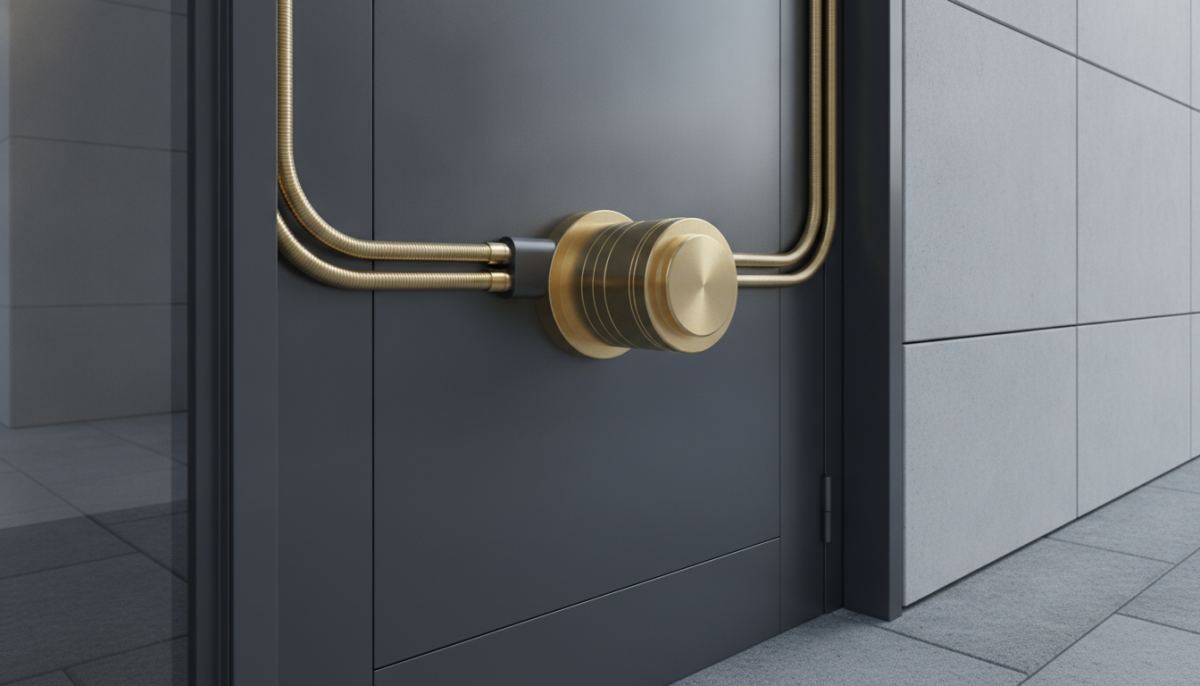
An electric rim cylinder with a tubular body is a special mechanical lock cylinder developed to meet the external cylinder requirement of electric lock strikes located on apartment and building entrance doors. Its biggest difference from standard cylinders is the cylindrical or tubular steel/brass body extension surrounding the cylinder. This structure ensures that the cylinder body fits completely inside the door profile and makes it impossible to be grabbed and turned or broken from the outside using tools such as levers, pliers, or pipe wrenches.
In terms of its working principle, the system has a two-way operation. When the intercom button is pressed from inside the apartment or a password/card is scanned from the external panel, the coil in the lock strike is energized and releases the latch. However, in the event of a power outage, system failure, or emergency, the physical key comes into play. When the key is inserted into the cylinder and turned, the cam or tail pin located at the rear part of the cylinder directly moves the mechanical latch of the strike, ensuring the door opens.
The high-quality brass and corrosion-resistant alloys used in its production make it possible for the internal pins of the lock to work without wear for many years. Especially thanks to cold forging press stamping techniques applied in modern lock production, the internal stress and strength of the parts are maximized.
Critical Advantages of Using Tubular Cylinders in Building Entrance Security
When standard lock cylinders are used on apartment doors, the part of the cylinder protruding from the door surface becomes the weakest link during burglary attempts. The body of the cylinder can be easily broken with breaking or drilling apparatuses. The tubular cylinder design, on the other hand, was developed to completely eliminate this vulnerability.
- High Resistance to Breaking and Pulling: The outer housing in tubular form wraps around the cylinder body, preventing it from being gripped with mechanical tools. In this way, breaking the cylinder through forcing is prevented.
- High Usage Lifespan: It possesses stainless and wear-resistant internal components that prevent pin wear on apartment doors opened and closed hundreds of times a day.
- Weather Resistance: Its corrosion resistance developed against outdoor environmental factors such as rain, moisture, and dust prevents the mechanism from locking or jamming.
- Hierarchical Access Compatibility: When needed, it can be integrated with master key systems throughout the facility, ensuring that both the building entrance and authorized areas can be opened with a single key.
Managements that handle building entrance security as a whole can provide full security discipline across the facility by securing not only the main entrance door but also areas such as storage rooms, meter rooms, and boiler rooms with progressively authorized key systems.
Step-by-Step Roadmap for Correct Installation and Cylinder Selection
The level of security provided by a lock is directly proportional to the accuracy of its installation. Even the highest quality cylinder can create a security vulnerability when installed incorrectly. While applying electric tubular rim cylinders to apartment doors, the following steps must be followed:
- Determining Door and Strike Dimensions: The thickness of the door leaf and the depth of the existing strike lock body must be measured precisely. The pipe length of the cylinder should be chosen to a measurement that remains flush (zero-to-zero) with the door surface; there must be no outward protrusion.
- Preparing the Cylinder Slot: The cylinder passage hole on the door profile should be neatly opened in accordance with the pipe diameter, and burrs must be cleaned.
- Tail Pin / Cam Adjustment: It must be ensured that the moving shaft or cam at the back of the cylinder fits completely into the mechanical opening slot inside the electric strike lock. Having the shaft remain too long or too short prevents mechanical opening.
- Tightening Fixing Screws: The cylinder must be firmly screwed to the door together with the strike body. It is recommended that the screws are corrosion-resistant steel.
- Mechanical and Electrical Testing: After the installation is completed, the door must be tested repeatedly both by being turned with the key and by giving an electrical trigger via the intercom.
Common Mistakes and Security Vulnerabilities
One of the most common mistakes encountered in sector practice is the use of long cylinders that are not suitable for the door thickness. A cylinder body protruding even a few millimeters from the outer door surface creates a gripping surface for malicious attempts. The cylinder surface must definitely be flush with the door sheet metal or rosette.
Another critical mistake is the use of inappropriate petroleum-derived heavy oils for lubrication during assembly. Such types of oils attract dust and dirt, causing the sensitive code pins inside the cylinder to stick and the lock not to turn. In lock mechanisms, only dry graphite powder or special silicone-based lock sprays should be preferred. In addition, key security level determination steps should not be skipped in facility projects, and unauthorized key copying must be prevented.
Frequently Asked Questions
- Does an electric tubular rim cylinder work during a power outage? Yes. An electric tubular rim cylinder is a completely mechanical lock component. Even if the intercom button does not work during power outages, residents can smoothly open the door by inserting their physical keys into the cylinder and turning them.
- Can a tubular cylinder be installed instead of a standard cylinder? If the lock body on the door is of the electric strike type, a tubular cylinder needs to be installed instead of standard cylinders. Tubular cylinders are designed in a way to fully adapt to the special mechanical structure and tail pin requirements of strike locks.
- Can the key of the cylinder be easily copied? It depends on the cylinder model and the security card system used. Keys of cylinders with security cards and patented profiles can only be duplicated at authorized dealers and upon presentation of the card. This maximizes building security.
Integrated Security Approach in Apartment and Facility Entrances
Building entrance security does not consist of just a single lock hardware; it must be handled as a whole, from the hydraulic closer of the building door to window securities. For instance, supporting windows on ground floors with PVC window security apparatuses and protecting common area storages with inter-opening padlock systems creates a comprehensive protection ring.
Choosing an electric tubular rim cylinder produced at high standards prevents the apartment door from being forced while allowing you to maintain your daily entry-exit comfort uninterrupted. To determine the most suitable lock solutions for your facility's door structure and to get professional support, contacting expert manufacturers is the rightest step.
Role of Electric Rim Lock Cylinders in Building Entrance Security (English Summary)
Building entrance doors represent the primary security perimeter for residential apartments and commercial properties. Electric rim lock cylinders with tubular protective bodies are specifically engineered to provide robust mechanical resistance against unauthorized intrusion while integrating smoothly with intercom and access control systems.
Unlike standard cylinders, the tubular design envelops the core mechanism, eliminating vulnerable grip points that could be manipulated with tools. In cases of power failure, the mechanical key override ensures uninterrupted access. When combined with master key hierarchies and heavy-duty hardware, these cylinders deliver durable, long-term security for high-traffic entrance gates.
İlginizi Çekebilir