Electric Rim Cylinder Failures and Repair Guide
Diagnose and fix electric rim cylinder failures, from stiff keys and spinning tailpieces to latch jamming. Explore our step-by-step technical repair guide.
In residential buildings, gated communities, and commercial facilities, electric rim cylinder assemblies provide an essential dual-action locking mechanism. They combine traditional mechanical key control with electrical release solenoids wired into intercoms or access control panels. Because these entry points handle continuous daily pedestrian traffic, the mechanical assemblies endure extreme repetitive stress. Over time, property managers and business owners frequently encounter frustrating malfunctions: the physical key refuses to turn, the external cylinder spins freely without retracting the latch, the latch gets wedged against the strike, or the door remains bolted despite receiving an electrical release trigger.
Any failure at a primary building portal creates both an immediate security vulnerability and an operational hazard for tenants or staff. Resolving these issues without unnecessary replacement requires an in-depth understanding of the tubular cylinder casing, the internal tailpiece shaft geometry, and the precise mechanical interaction between the pin tumbler core and the interior rim lock. This practical technical guide details the root causes behind common tubular cylinder breakdowns and provides a step-by-step troubleshooting protocol to restore smooth, dependable operation.
How Electric Lock Tubular Cylinders Work and Why They Fail
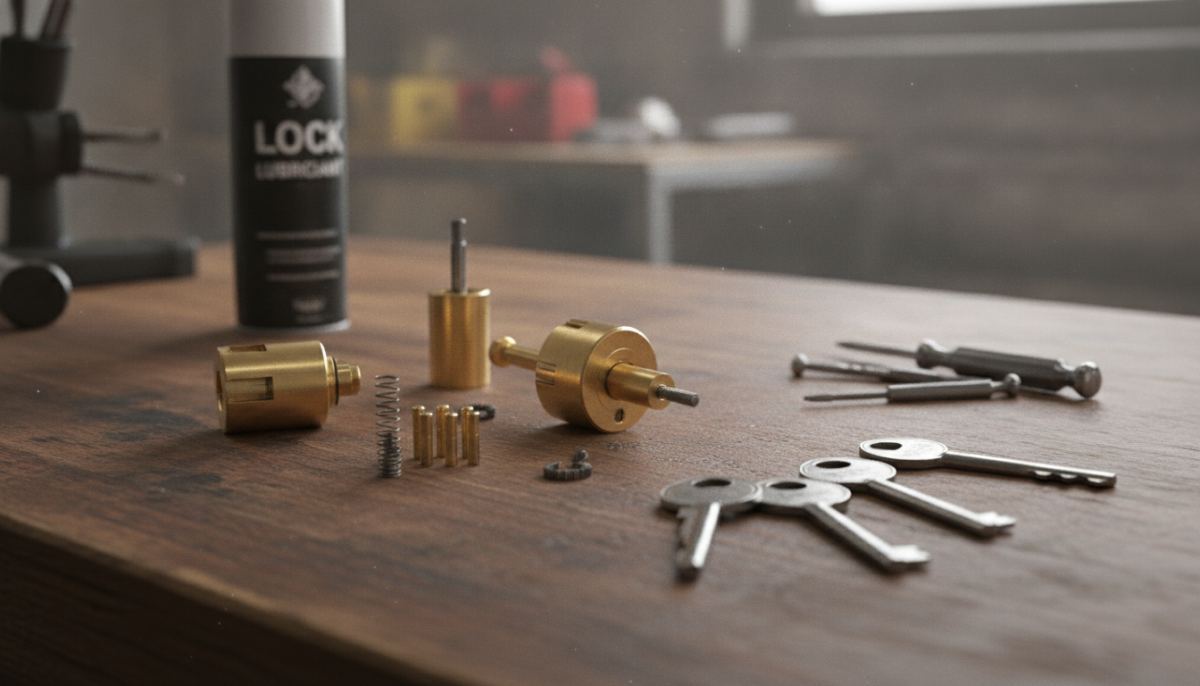
Unlike standard Euro-profile cylinders that sit flush inside a mortise mortise pocket, a tubular rim cylinder features an extended tubular sleeve—typically made of drawn brass or steel—that passes entirely through the thickness of the door leaf. Inside this protective sleeve runs an elongated flat or square drive shaft, commonly known as the tailpiece. When an authorized key rotates the external cylinder plug, this shaft transmits rotational torque directly into the actuator cam of the interior surface-mounted electric rim lock, retracting the spring latch manually.
The primary reason these mechanisms break down is continuous mechanical shock coupled with environmental exposure. Main entrance doors are subject to slamming, wind load fluctuations, and vibration transmitted by aggressively adjusted pneumatic or hydraulic overhead door closers. Every violent slam transmits shock waves directly through the mounting screws, the outer cylinder tube, and the delicate brass internal pins. Reviewing professional insights on electric tubular rim cylinder installation highlights just how crucial precise alignment and proper torque distribution are to the long-term integrity of the whole assembly.
Furthermore, exterior-facing cylinders are vulnerable to airborne debris, rainwater ingress, temperature swings, and well-intentioned but disastrous lubrication practices. Contaminants settle inside the tight tolerances of the pin chambers, causing the delicate pin springs to compress sluggishly or bind entirely. When sub-standard metal alloys are used in low-grade hardware, the tailpiece or cylinder body can deform under pressure, permanently throwing the internal shear line out of alignment.
Most Common Tubular Cylinder Failures and Root Causes
Accurate fault diagnosis eliminates guesswork and saves both labor time and replacement costs. When an electric rim cylinder fails in the field, the root cause usually falls into one of three distinct mechanical categories.
Key Not Inserting or Turning Stiffly
When users struggle to insert the key into the keyway or find it impossible to turn once inserted, the problem almost always points to debris obstruction or worn tumbler pins. In outdoor or semi-outdoor vestibules, wind carries micro-dust and grit directly into the keyway. Over months, this grit mixes with atmospheric moisture to form a paste that prevents the driver and key pins from dropping cleanly across the shear line. Additionally, heavily worn or bent keys deform the pin contact surfaces, preventing accurate alignment. In commercial facilities managing complex access protocols, upgrading to engineered master key systems provides tighter machining tolerances and hardened pin chambers that significantly reduce wear compared to loose standard cylinders.
Tailpiece Spinning Freely Without Retracting the Latch
If the key rotates 360 degrees smoothly inside the cylinder but the door latch does not move, the physical connection between the key plug and the lock mechanism has failed. The drive tailpiece running through the tubular sleeve has likely snapped, slipped out of its mounting slot, or rounded off inside the lock receiver. This issue is predominantly caused by an incorrectly measured shaft during installation. If the tailpiece is cut too short, it barely engages the receiving cam of the electric rim lock; under moderate resistance, it slips out entirely. If the fastening backplate screws loosen over time, the cylinder shifts outward, pulling the shaft free from the drive hub.
Latch Jamming and Failing to Engage the Strike Box
A frequent complaint among building managers is that the electric buzzer triggers normally, but the door refuses to open unless pulled or pushed with considerable force. While often misdiagnosed as an electrical solenoid failure, this problem is almost always mechanical friction. Door hinges naturally sag over time due to structural settling and heavy usage, causing the bevelled latch bolt to rub heavily against the rim of the strike plate. This side-load pressure binds the latch mechanism, overpowering the magnetic release coil inside the electric rim lock. For a deeper analysis of this dynamic, read our technical overview on the role of electric tubular rim cylinders in building entrance security.
Step-by-Step Tubular Cylinder Troubleshooting and Repair Guide
Before replacing an entire lock set, follow this systematic diagnostic checklist to isolate the mechanical fault and implement the correct fix. Always perform testing while the door is propped open to avoid accidental lockouts.
- Verify Door Leaf and Frame Alignment: Test the key and latch operation with the door fully open. If the key turns effortlessly and the latch extends smoothly while the door is ajar, but binds when the door is closed, the cylinder itself is in perfect working order. The issue lies entirely in door sag, hinge wear, or an improperly aligned strike plate. Adjust the hinge pivots or reposition the strike box to eliminate physical friction on the latch bolt.
- Inspect Cylinder Perpendicularity and Mounting Screws: Remove the interior cover of the electric rim lock to expose the cylinder mounting bracket. Check whether the tubular body sits completely perpendicular (90 degrees) to the door face. Unevenly tightened screws tilt the cylinder tube, causing the internal drive shaft to bind against the inner tube wall whenever rotational torque is applied. Loosen the screws, align the cylinder squarely, and tighten evenly.
- Measure and Adjust Tailpiece Length: Check how far the tailpiece extends into the drive hub of the lock case. The shaft should penetrate the hub securely without bottoming out against the back of the lock housing. If the tailpiece is too long, it creates axial pressure that prevents the cylinder plug from turning; if it is too short, it will strip the drive slot. Cut the break-off shaft to the exact depth required by your door leaf thickness.
- Clean and Apply Dry Lubrication: Never use heavy grease, motor oil, or household vegetable oil in a lock cylinder. These sticky substances attract dust and turn into an abrasive sludge that paralyzes the pin springs. Flush the keyway using a fast-evaporating lock cleaner spray to dislodge dirt, allow it to dry completely, and then apply finely powdered graphite or an approved dry PTFE spray directly into the key slot.
- Inspect Pin Responsiveness: Insert the original key slowly and listen closely for the crisp clicking of the internal pin chambers. If the key feels mushy or catches at specific depths, a spring has collapsed or a pin has sheared. In this case, the cylinder core must be repinned by an expert or replaced with a new tubular assembly.
Frequent Installation and Maintenance Mistakes
Field experience reveals that most premature cylinder failures stem from careless installation practices rather than inherent material defects. One of the most damaging mistakes is using high-torque cordless impact drivers to tighten the cylinder retaining screws. Excessive torque distorts the drawn metal tube, causing it to pinch the rotating tailpiece and crack internal brass retaining collars.
Another common but damaging shortcut is grinding or filing down the latch bolt when a sagging door fails to latch. Modifying the factory bevel geometry alters the angle of attack against the strike plate, which prevents the electric release solenoid from dropping cleanly and compromises overall forced-entry resistance. Just as perimeter facilities depend on well-maintained keyed-alike padlocks to maintain dependable physical boundaries, building entry points demand regular inspection of clearances rather than destructive modifications to latch bolts.
Finally, building maintenance personnel often overlook the overhead door closer settings. If the closer is set to slam the door violently to ensure latching, the kinetic shock repeatedly batters the cylinder internals. The door closer should be adjusted to close smoothly at a controlled speed, utilizing a gentle latching action during the final few inches of travel.
Frequently Asked Questions About Electric Lock Tubular Cylinders
What should I do if the key gets stuck inside the tubular cylinder?
Avoid applying aggressive twisting force or pulling with pliers, as this can easily shear the key blade off inside the plug. Apply a dedicated solvent-based lock lubricant directly into the cylinder around the key shaft. Allow the liquid to penetrate the pin chambers for several minutes. Gently tap the head of the key inward with the handle of a screwdriver to unseat jammed pins, wiggle the key slightly up and down, and pull outward along a completely straight axis.
Why does the lock buzz electrically but fail to open with the key?
This symptom indicates that the electrical circuit and internal solenoid are functional, but the mechanical drive linkage has separated or jammed. The tailpiece running through the tubular sleeve has likely slipped out of the lock drive slot, snapped due to metal fatigue, or the pin tumbler core has frozen. The interior lock cover must be removed to inspect the mechanical engagement of the shaft.
Are cylinder tube lengths universal across all door types?
No. While tubular cylinders feature a standard diameter to fit common rim locks, the tube length and drive shaft must correspond to the thickness of the door leaf. Standard assemblies are designed with modular tubes and scored break-off shafts that can be cut down to fit narrow hollow metal, aluminum profile, or thick solid wood doors accurately.
Can WD-40 or general multipurpose oil be used on cylinder pins?
Standard multipurpose wet lubricants are not recommended for lock cylinders. While they provide temporary relief by loosening stuck pins, their oily residue attracts environmental dust, grit, and airborne soot. Over time, this mixture thickens into a sticky sludge that causes pins to seize permanently. Always use dry graphite powder or dedicated dry-film PTFE lock lubricants.
Preventing Recurrent Failures with Robust Locking Solutions
Minimizing lock downtime in high-traffic commercial and residential properties requires choosing hardware engineered to withstand heavy use. Cylinders machined from solid drawn brass, equipped with stainless steel pin springs and precision-cut drive components, offer superior resistance to mechanical wear and environmental corrosion compared to zinc-diecast alternatives.
Ensuring correct installation, routine dry lubrication, and prompt alignment adjustments will extend the lifespan of your door entry hardware and safeguard your property against unexpected lockouts. To select the ideal locking hardware for your project or to obtain technical guidance on advanced master key systems, contact us today to speak with our technical team.
İlginizi Çekebilir