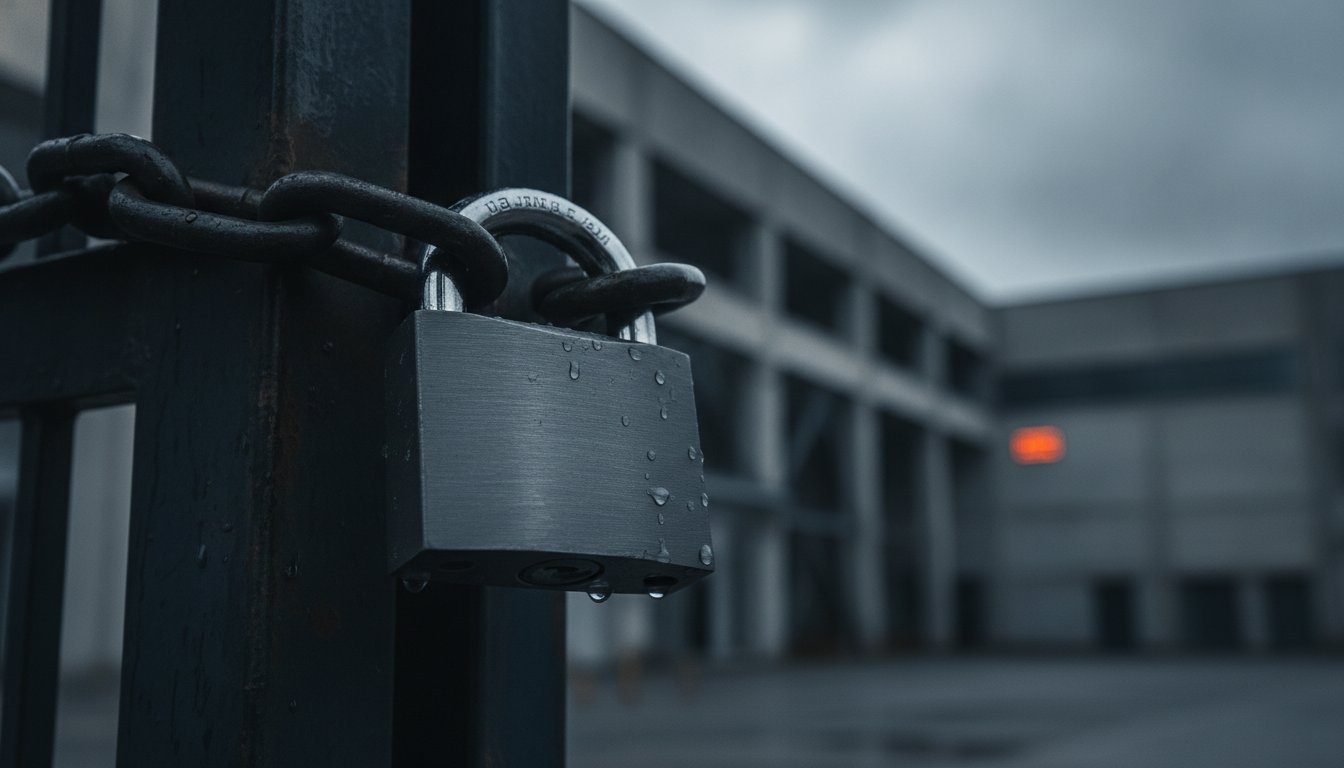
Is entrusting the outdoor security of an industrial facility solely to standard products claimed to be “waterproof” actually a serious operational risk that needs to be managed? Many facility managers lose significant time and budget every year because of locks whose cylinders seize due to corrosion or whose mechanisms become inoperable. At Ay Kilit, backed by our manufacturing discipline dating back to 1964, we know that a true weather-resistant padlock is not merely a product with a rust-resistant coating; it is an engineered solution designed to operate reliably even under demanding humidity and temperature fluctuations.
If you are tired of carrying hundreds of keys during field operations and want greater confidence in the durability of your outdoor locks, this guide has been prepared for you. We explain the importance of CEN Grade 4 and higher security levels under EN 12320, the effect of hot forging press technology on body strength, and how master key systems can improve operational efficiency. From corrosion-resistant surface treatments to hierarchical access control, we will examine the 2026 industrial checklist for professional outdoor lock investments.
Key Points
- Learn how outdoor locks should withstand moisture and UV exposure to help prevent the hidden costs caused by corrosion in industrial facilities.
- Discover how technical details such as hot-forged steel bodies and boron-alloy shackles improve the performance of a weather-resistant padlock.
- See how master key system integration can eliminate key management complexity by establishing hierarchical authorization throughout a facility.
- Apply professional maintenance routines, such as using dry graphite-based lubricants instead of conventional grease where appropriate, to extend lock mechanism service life.
- See how you can benefit from Ay Kilit’s project-specific CNC machining and hot forging capabilities, supported by engineering expertise dating back to 1964.
Contents
Why Is a Weather-Resistant Padlock Essential for Outdoor Security?
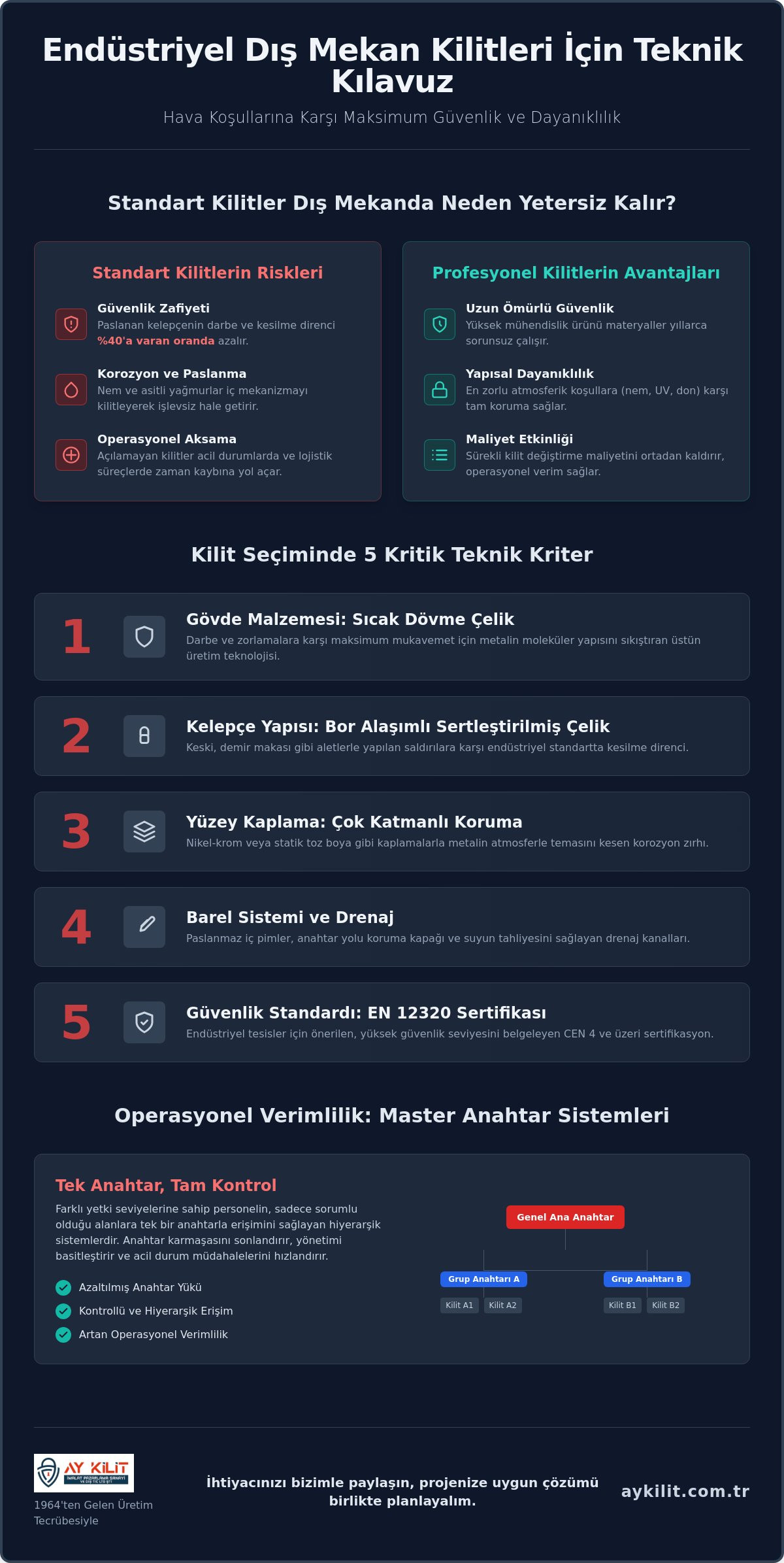
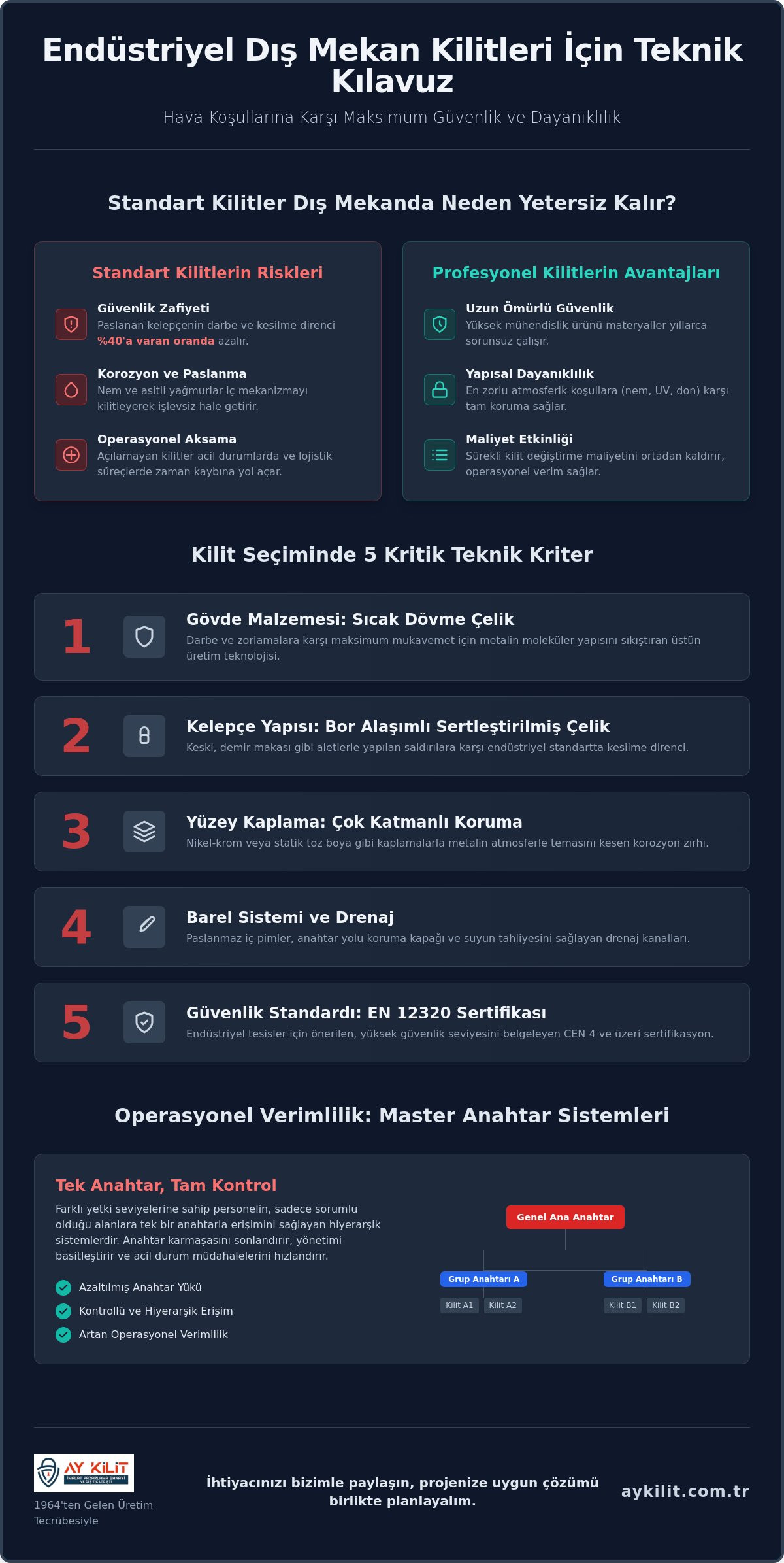
Padlocks responsible for perimeter security at industrial facilities are directly exposed to atmospheric conditions around the clock. A true weather-resistant padlock does more than provide basic protection against splashing water. Professional solutions are engineered to retain their mechanical functionality under moisture, UV radiation, and extreme temperature fluctuations. While standard locks are generally designed for indoor environments or locations with limited exposure to moisture, products used in industrial sites require structural resistance to corrosion.
The hidden cost of corrosion should not be viewed merely as the expense of replacing a damaged lock. A lock rendered unusable by corrosion can disrupt operational processes, cause logistics delays, and prevent access to a facility during emergencies. In ports, construction sites, power plants, and other locations exposed to harsh atmospheric conditions, unsuitable standard products may have significantly shortened service lives. When general padlock security principles are examined, it becomes clear that material durability can directly influence the security performance of outdoor products. Corrosion can progressively weaken metal and reduce resistance to impact and cutting, creating a security vulnerability.
Effects of Atmospheric Conditions on Lock Mechanisms
Oxidation can have a blocking effect on the precision pins, springs, and other internal components of a lock. Corrosion that begins at a microscopic level may eventually make it difficult or impossible to turn the key. Particularly in Türkiye’s coastal regions, high humidity and salt exposure can accelerate deterioration of lock mechanisms. In regions where freezing is possible, water trapped inside locks without suitable drainage can freeze and expand, potentially damaging internal components. Windborne dust and sand can also enter the keyway and interfere with the mechanism. In the padlock models manufactured by Ay Kilit, material selection and cylinder protection are prioritized according to such environmental challenges.
Industrial Asset Protection Requirements
The main reason standard locks can be inadequate in warehouses and outdoor facilities is that they may not address physical attack resistance and environmental durability as an integrated requirement. As corrosion progresses, a shackle or body can lose mechanical integrity and become more vulnerable to physical attacks. Manufacturer-oriented solutions can provide material and coating configurations adapted to the project location and climate. Our experience since 1964 has shown that a corrosion-resistant lock should also incorporate a robust, high-security cylinder system. In the long term, investing in suitable industrial-grade products can be more cost-effective than repeatedly replacing products that are not designed for demanding outdoor conditions.
5 Technical Criteria to Consider When Choosing a Weather-Resistant Padlock
When selecting locks for industrial facilities, attention should be focused on the mechanical specifications stated in the product datasheet rather than appearance alone. A professional weather-resistant padlock is created by optimizing five fundamental components through disciplined engineering. These criteria help ensure that the lock continues to perform reliably over an extended service life.
- Body Material: Traditional brass bodies provide natural corrosion resistance, while appropriately engineered steel bodies may be preferred where higher physical attack resistance is required. Components produced using hot forging press forming can achieve a dense, mechanically robust structure.
- Shackle Durability: Stainless steel shackles can offer excellent corrosion resistance outdoors, while hardened boron-alloy steel shackles with suitable protective coatings are commonly used where high cutting resistance is required.
- Surface Coating Technology: Electrostatic powder coating or appropriately engineered multilayer metallic coatings can isolate the base metal from atmospheric exposure and improve corrosion resistance.
- Cylinder and Key System: Cylinder structures should be selected according to the required resistance to dirt, dust, manipulation, and unauthorized key control.
- Sealing Components: Keyway covers, protective boots, seals, and drainage features can reduce the amount of water and contaminants entering the mechanism.
Materials Science and Strength Standards
ASTM F883 addresses performance requirements and test methods relevant to padlocks. Forged components can offer a favorable grain structure and reduced internal defects compared with certain casting processes when properly manufactured. This can improve resistance to physical attack and provide a strong structural foundation for protective coatings. In marine environments or industrial sites exposed to aggressive atmospheres, brass and appropriately selected corrosion-resistant materials can provide important operational advantages.
Coating and Protection Technologies
Electrostatic powder coating on the outer surface of a lock is not merely an aesthetic choice; when the correct coating system is selected, it can also provide environmental protection. A coating designed to withstand UV exposure and outdoor conditions continues protecting the underlying metal as long as its integrity is maintained. In areas exposed to saltwater or industrial contaminants, properly specified nickel, chrome, or other protective coating systems can provide an additional corrosion barrier. Internal components are equally important. Regardless of how robust the outer body is, corroded springs or pins can render the lock unusable. For this reason, Ay Kilit evaluates the material quality of internal components with the same attention applied to the outer body.
You can receive technical support from our specialist team to determine the most appropriate configuration for your facility’s geographical location and security requirements.
Operational Efficiency: Master Key Integration for Outdoor Locks
Security across extensive outdoor areas of industrial facilities depends not only on physical durability but also on the manageability of the access hierarchy. Carrying a separate key for every weather-resistant padlock used throughout a site can slow operations and create key-management risks. Master key systems developed by Ay Kilit are designed to simplify this structure by allowing authorized facility managers to control multiple locks through a defined key hierarchy. This integration can improve response speed during emergencies while reducing the operational burden associated with managing large numbers of individual keys.
A hierarchical structure used in corporate projects can allow security managers to access all designated locks while operators access only the areas for which they are authorized. Performance requirements for the padlocks themselves can also be evaluated within relevant standards such as ASTM F883. Keyed-alike systems can additionally allow locks within the same authorization group to be operated using a common key. This approach can significantly simplify control in areas containing numerous locking points, such as substations, logistics warehouses, and perimeter gates.
Hierarchical Access Control and Security
Planning key permissions according to authorization levels throughout a facility is an important part of modern physical security management. During planning, a coding and authorization structure is created for each cylinder group. The implications of a lost key depend on the architecture of the master key system, so expansion capacity, key control, and future rekeying requirements should be considered during initial design. For further technical details and project planning information, you can visit our master key systems page.
Industrial Application Scenarios
Factory perimeter gates, outdoor storage areas, utility installations, and energy infrastructure are among the locations where weather-resistant padlocks are commonly required. In logistics centers, lock management should follow controllable standards from truck parking areas to bonded warehouses. Ay Kilit’s customizable key plans can be manufactured according to the specific requirements of your business using CNC-supported production. For custom projects, you can review our padlock master key solutions to optimize operational efficiency.
Professional Maintenance and Protection Checklist for Outdoor Locks
A weather-resistant padlock exposed to the demanding atmospheric conditions of an industrial facility still requires periodic inspection, regardless of how robust its engineering design may be. In ports, construction sites, power plants, and similar locations, exposure to dust, salt, moisture, and contaminants can gradually affect internal tolerances. One of the most common maintenance mistakes is assuming that outdoor locks are completely maintenance-free. A regular inspection protocol can substantially extend service life and reduce unexpected operational disruptions.
Lubrication and Cleaning Protocol
Keeping the keyway clean is important for reliable operation of outdoor locks. Loose dust and particles should be removed carefully using a method recommended by the lock manufacturer. Lubrication requirements vary according to cylinder design and manufacturer specifications. Heavy grease and unsuitable oils can trap dust and dirt, potentially creating deposits that interfere with the mechanism. Where approved for the specific lock, dry lubricants or manufacturer-recommended lock lubricants may be preferable. Keys should also be kept clean to prevent contaminants from being transferred into the cylinder.
Physical Inspection and Replacement Criteria
Annual security inspections at industrial facilities should evaluate not only whether doors and gates are locked but also the structural condition of the locking hardware. Deep impact marks on the shackle, deformation, significant corrosion, or severe deterioration of protective coatings may indicate that the security performance of the lock has been compromised. A key becoming increasingly difficult to turn can also be an early warning sign of contamination, corrosion, misalignment, or internal wear. Timely professional intervention can prevent complete lock seizure and associated operational disruption.
- Seasonal Transitions: Before winter, check protective covers, drainage features, and the general condition of the mechanism, following the manufacturer’s lubrication recommendations where necessary.
- Corrosion Monitoring: Inspect whether corrosion on the shackle, body, or locking interface is superficial or has begun to compromise the underlying metal.
- Master Key Inspection: Test locks within the master key system periodically to verify consistent and reliable operation with their authorized keys.
You can contact our technical specialists to evaluate the current condition of your facility’s locks and establish appropriate maintenance intervals.
Ay Kilit: Project-Specific Lock Solutions with Domestic Manufacturing Expertise
Since 1964, Ay Kilit has addressed the security requirements of Turkish industry through a disciplined manufacturing approach supported by modern engineering. More than half a century of production experience, combined with the responsiveness and technical flexibility of domestic manufacturing, provides strategic advantages for industrial facilities. Our weather-resistant padlock solutions developed for corrosion-prone and security-critical outdoor environments are designed not merely as locking devices but as components of a facility’s operational security infrastructure. Our manufacturing approach allows product configurations to be evaluated according to different environmental and operational requirements.
CNC sliding-head machines and high-precision machining centers within our production infrastructure enable components to be manufactured with tightly controlled dimensions. Our in-house electrostatic powder coating capabilities provide protective surface treatment options for metal components. This integrated structure enables a wide range of project-specific modifications, from color coding to protective surface configurations. For facility managers and technical procurement teams, this flexibility provides tailored solutions where standard products may not fully satisfy project requirements.
Our Manufacturing Capabilities and Quality Standards
Our long-standing expertise in brass and steel processing is supported by modern manufacturing infrastructure. In particular, our hot forging press forming capabilities allow us to manufacture mechanically robust components for suitable applications. Each weather-resistant padlock configuration should be evaluated according to its intended environment, required security level, material selection, surface protection, and applicable testing requirements. This disciplined quality approach is intended to reduce risks such as corrosion-related seizure and mechanical blockage under demanding conditions.
Corporate Partnership and Technical Support
We operate not only as a lock manufacturer but also as a solution-oriented business partner. For factories, warehouses, and logistics centers, we can evaluate access requirements and develop master key structures suited to the facility’s operational hierarchy. After-sales technical support and system expansion options help the locking infrastructure adapt as the business grows. To take your corporate security strategy further, you can review our guide to high-security padlocks for additional technical information.
Share your requirements with us, and let us plan the right solution for your project together.
Combine Engineering and Operational Efficiency in Outdoor Security
Securing the outdoor areas of an industrial facility is not simply about purchasing a lock; it is about creating a sustainable operational security ecosystem. As detailed throughout this guide, when selecting a professional weather-resistant padlock, technical factors such as body material, shackle construction, protective coatings, environmental sealing, and hierarchical master key systems directly influence long-term cost management. Appropriate material selection and disciplined maintenance routines can improve access control while reducing disruptions caused by corrosion and environmental exposure.
At Ay Kilit, we combine our domestic manufacturing discipline dating back to 1964 with modern CNC machining and forging technologies. Regardless of the complexity of your project’s geographical conditions or security hierarchy, our engineering expertise enables us to develop tailored solutions. Together, we can implement locking systems designed to protect your facility’s assets while improving operational efficiency. Protect your outdoor investments and facility integrity with a professional approach that treats security as an engineering discipline.
Share your requirements with us, and let us plan the right solution for your project together.
Frequently Asked Questions
Which material is most resistant to corrosion when choosing an outdoor padlock?
Brass is widely valued for its natural resistance to atmospheric corrosion and can perform well in humid outdoor environments when the overall lock design is suitable. Stainless steel is another strong option for corrosion-critical applications. Where higher resistance to physical attacks is required, hardened steel components with appropriately engineered protective coatings may be preferred. The best material depends on the balance between corrosion exposure and required attack resistance.
Does a master key system create a security vulnerability in outdoor locks?
A professionally designed master key system does not inherently create a security vulnerability; however, its security depends on correct system architecture, cylinder quality, key control, authorization policies, and management procedures. A properly planned hierarchy allows each user to access only authorized locks while reducing unnecessary key complexity and improving administrative control.
How can a corroded padlock mechanism be cleaned safely?
A corroded mechanism should first be inspected to determine whether corrosion has compromised the structural integrity of the lock. Loose contaminants may be removed carefully, followed by use of a cleaning or lubrication product approved by the lock manufacturer. Heavy grease or unsuitable oils should be avoided where they could trap dirt inside the cylinder. Severely corroded or structurally weakened security locks should generally be replaced rather than relied upon after temporary restoration.
Why is a hardened shackle important?
A hardened shackle improves resistance to cutting, sawing, and other physical attacks. Heat-treated alloy steel shackles, including suitable boron-alloy steels, can provide substantially greater mechanical resistance than unhardened mild-steel alternatives. For a high-security weather-resistant padlock, shackle material, diameter, exposure, and protective coating should all be considered together.
Which lock coating is suitable for highly humid coastal areas?
For coastal environments with high salt exposure, corrosion-resistant base materials combined with appropriately specified protective coating systems are recommended. Nickel-based, chrome-based, zinc-based, powder-coated, or other industrial surface treatments may be suitable depending on the base material and environmental severity. Selection should ideally be supported by relevant corrosion testing and manufacturer specifications.
How often should outdoor padlocks be lubricated?
Inspection and lubrication frequency depends on environmental exposure, usage intensity, and manufacturer recommendations. Industrial locks may require inspection several times per year, particularly in dusty, saline, humid, or chemically aggressive environments. Only lubricants compatible with the specific cylinder and mechanism should be used.
Can Ay Kilit products be added to an existing master key system?
Compatibility with an existing master key system depends on the cylinder platform, key profile, coding architecture, and authorization structure already in use. Ay Kilit’s technical team can evaluate the existing system and determine whether new locks can be integrated directly or whether an alternative configuration is required. This assessment helps preserve system integrity while planning future expansion.
What is the difference between a hot-forged steel body and a cast body?
A hot-forged steel component is shaped under pressure at elevated temperature, producing a directional grain flow and potentially reducing certain internal defects when the process is correctly controlled. A cast component is produced by solidifying molten metal in a mold and may exhibit different microstructural characteristics depending on the alloy and casting process. Forging is often preferred for components requiring high mechanical strength and impact resistance, while actual performance must always be evaluated according to material grade, geometry, heat treatment, and manufacturing quality.