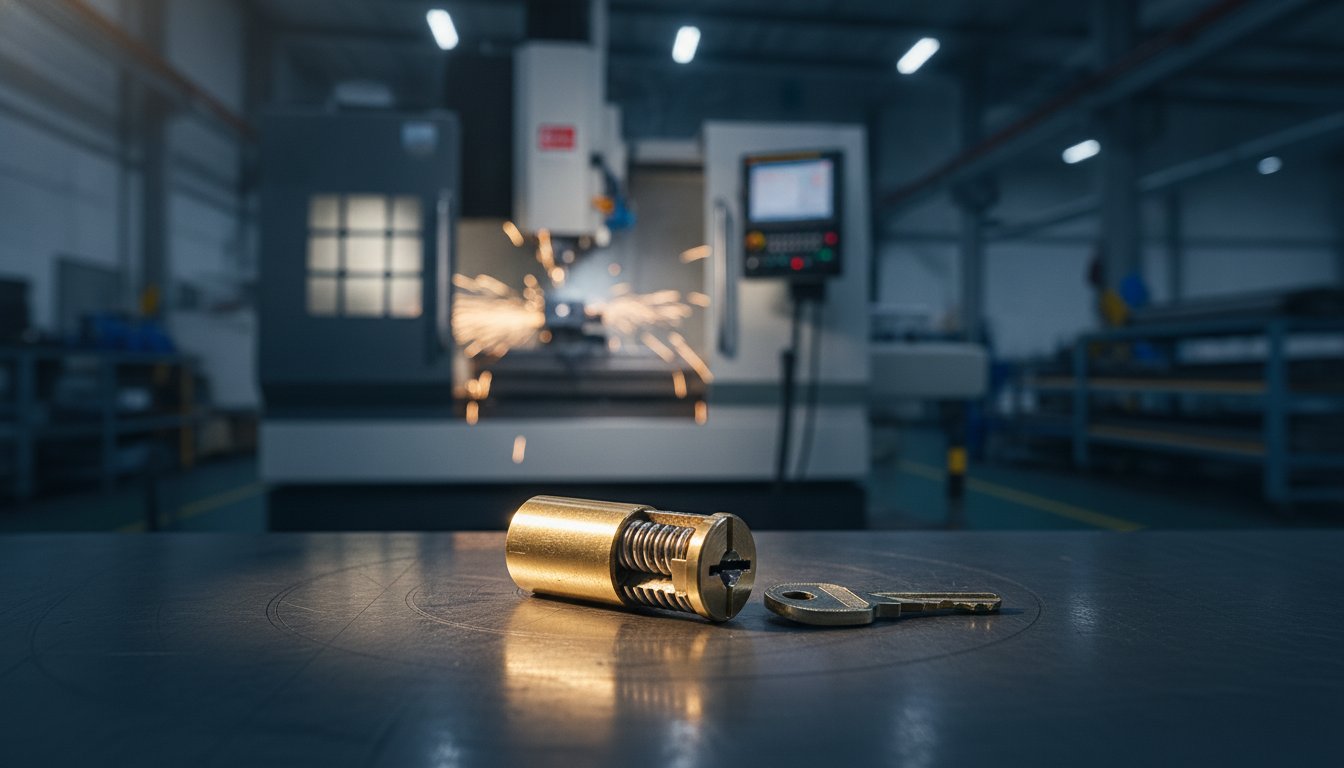
The security of an industrial facility is measured not by the aesthetic design of the lock on the door, but by the engineering discipline and manufacturing quality at the heart of that lock. Many purchasing managers often overlook the direct impact that technical precision in the cylinder lock systems manufacturing process has on long-term operational efficiency and the risks of unauthorized key duplication. However, every stage, from shaping brass or steel raw materials under high pressure using hot forging press technology to micron-level machining on CNC sliding headstock lathes, forms the solid foundation of corporate security.
Low-quality cylinders that lose functionality in a short time or the key confusion created by complex locking structures can lead to serious security vulnerabilities and difficult-to-recover costs in professional facility management processes. With an expert perspective that recognizes these challenges, this guide carefully examines all technical details, from the manufacturing technologies of cylinder lock systems to material standards, as well as the critical role these systems play in corporate security. Throughout the article, you will have the opportunity to explore in depth the importance of technical certifications such as TS EN 1303, the operational convenience provided by master key systems, and project-specific industrial solutions offered across a wide range of applications, from factories to hotels.
Key Points
- You will discover the critical role of lock cylinders in mechanical security and how key combination capacity determines the level of security.
- You will learn how micron-level precision affects lock service life in cylinder lock systems manufacturing processes using hot forging and CNC technologies.
- You will analyze the technical standards of raw materials such as MS 58 calibrated brass and stainless steel, which provide long service life in industrial facilities.
- You will understand the hierarchical structure of master key systems that prevent unauthorized access and provide operational efficiency in corporate environments.
- You will see the advantages that project-based manufacturing solutions developed specifically for the architectural structure of your facility offer beyond standard solutions.
Table of Contents
What Is a Lock Cylinder? The Core Component of Mechanical Security
A lock cylinder is regarded as the heart of door security in industrial and corporate buildings. Also referred to as a cylinder in technical terminology, this unit is the core structure that contains the key coding mechanism. In mechanical security systems, the quality of a cylinder is measured by its key combination capacity and its resistance to physical attacks. In corporate facilities, access authorization is achieved through the precise pin arrangement inside the cylinder. Modern cylinder systems are now equipped with special drilling and break-in protection options to provide the highest level of security. At Ay Kilit, with the experience we have gained since 1964, we prioritize engineering discipline at every stage of manufacturing these critical components.
Core Components of Cylinder Lock Systems
The primary factor determining a lock's service life and smooth operation is the tolerance values applied during manufacturing. In the cylinder lock systems manufacturing process, the body and plug structure are generally manufactured from MS 58 calibrated brass or high-strength stainless steel. These materials provide corrosion resistance while also creating a strong framework against physical impacts. The coding pins and springs inside the lock operate according to the pin tumbler lock mechanism principle; micron-level precision ensures that the key fits the cylinder perfectly and that the mechanism continues to operate reliably for years. The cam mechanism is the primary transmission component that transfers the rotational movement received from the key to the lock bolt, physically completing the locking process.
Cylinder Types and Areas of Application
The architectural requirements of industrial facilities and commercial buildings require the use of different cylinder types. Standard cylinders are ideal for general use, while thumbturn cylinders, which do not require a key from the inside, provide operational convenience at rapid evacuation points. Half-cylinder models are generally preferred for electrical panels, padlock systems, or shutter mechanisms. In areas requiring high security, dimple cylinder systems are used instead of standard toothed keys. These systems provide more complex coding possibilities and minimize the risk of unauthorized key duplication. In high-traffic environments such as factories and logistics centers, heavy-duty lock cylinders are the most suitable choice for operational continuity. In particular, cylinders integrated with master key systems provide exceptional hierarchical management convenience in corporate access control.
Cylinder Lock Systems Manufacturing Processes and Technologies
The performance of a high-security lock depends on a meticulous engineering discipline that begins at the design stage and is completed on the final assembly line. In the cylinder lock systems manufacturing process, every technical step applied from raw material selection onward determines the service life and operational reliability of the final product. At Ay Kilit, the manufacturing cycle we carry out is not simply about shaping a piece of metal; it is about creating flawless mechanical operation through micron-level tolerances. To maintain consistent quality in mass production, we use automation-supported control systems and ensure that every cylinder achieves a service cycle life exceeding industrial requirements.
CNC Sliding Headstock Machining and Precision Manufacturing
The alignment of the pin holes on the cylinder plug and body is one of the most critical factors determining the operating quality of the lock. To achieve this precision, we utilize CNC sliding headstock machining technology. Unlike conventional machining methods, CNC technology allows pin chambers to be drilled with micron-level tolerances. As a result, the key moves smoothly inside the cylinder without sticking. Our precision machining capabilities ensure that every component maintains the same technical specifications as the previous one, even in high-volume production. This manufacturing discipline is the foundation for years of reliable operation, particularly in complex locking mechanisms.
High Strength Through Hot Forging Press Technology
Resistance to physical force and impact is directly related to the manufacturing method used for the cylinder body. The hot forging press method applied at the Ay Kilit factory makes the molecular structure of the metal denser and more resistant. Brass bodies shaped under high temperatures achieve significantly greater fracture and bending strength compared with cast components. This technique enables cylinders to form a strong line of defense against external drilling or breaking attempts. In addition, the forging process improves the material's corrosion resistance, helping locks maintain their performance even in humid or demanding outdoor environments.
These technical manufacturing standards are maintained through an approach aligned with the performance criteria of the globally recognized Builders Hardware Manufacturers Association (BHMA). Lock cycle life, durability tests, and security ratings are carefully monitored within the framework of standards established by these authorities. To determine the most suitable technical configuration for your facility's security requirements, you can contact our engineering team and explore our project-specific solutions. At Ay Kilit, we combine the craftsmanship precision we have maintained since 1964 with modern industrial technologies to manufacture reliable cylinder systems for your business.
Material Quality in Manufacturing: Strength of Brass and Stainless Steel
In the cylinder lock systems manufacturing process, one of the most critical elements of mechanical security, the chemical composition of the raw material is just as important as the design itself. A lock is expected not only to remain securely closed, but also to operate reliably thousands of times over many years while resisting physical attacks. The primary material that meets these expectations is MS 58 calibrated brass, widely regarded as a standard material in lock manufacturing. Brass provides an excellent balance between machinability and structural durability. At Ay Kilit, we carefully control the purity and alloy ratios of raw materials throughout our manufacturing processes, establishing resistance to forced entry from the material selection stage onward.
Material selection directly affects a cylinder's resistance to burglary attempts. For example, the density of the brass used in the body provides a solid foundation for integrating hardened steel pins designed to resist drilling. Stainless steel components are generally used at points where greater wear resistance is required within the internal mechanism. The hybrid use of these two materials enables the lock to withstand both external impacts and metal fatigue that may develop over time. Our manufacturing discipline is carried out in alignment with ISO 9001 quality management standards, supporting consistent strength and quality across every cylinder produced.
Advantages of Brass Cylinder Manufacturing
Brass has naturally favorable friction characteristics that support smooth mechanical operation. This property reduces friction between the pins and springs inside the cylinder, helping extend the service life of the mechanism. Professional brass cylinder manufacturers not only shape the material but can also apply specialized manufacturing and finishing processes to achieve the required mechanical properties. This helps the cylinder maintain dimensional stability across changing operating conditions and allows the key to remain properly aligned with the internal pins. Brass's natural corrosion resistance also helps reduce common problems such as internal oxidation, sticking mechanisms, or difficulty turning the key.
Surface Treatments and Protective Coatings
Industrial locks are often used under demanding environmental conditions. A logistics center near the sea or a factory with high humidity levels can expose locks to significant corrosion pressure. In such environments, nickel, chrome, and satin finishes serve not only an aesthetic purpose but also act as a protective layer. Static powder coating services offered by Ay Kilit help isolate lock components from external factors where applicable. Appropriate corrosion-resistance testing and quality-control procedures are important for verifying performance under demanding climatic conditions and ensuring that locks maintain their functionality over time.
Cylinder Use in Corporate Facilities and Master Key Integration
Security in a corporate environment does not mean carrying a separate key for each of thousands of doors. In factories, hotels, hospitals, and large-scale commercial facilities, key management is one of the most critical components of operational efficiency. Hierarchical structures configured during the cylinder lock systems manufacturing process allow authorized personnel to control multiple access points with a single key while ensuring that lower-level users can access only their designated areas. At Ay Kilit, we base our manufacturing discipline not only on lock strength but also on implementing these complex access control schemes accurately.
Master key systems are created by configuring the pin arrangement inside the cylinder according to a predefined access hierarchy. During production, each cylinder can be configured to operate with its own individual key as well as designated master keys within the system. This strategic planning eliminates key confusion in corporate facilities. For facility management, cylinder selection is not merely a purchasing decision but a long-term operational choice that should also consider future expansion requirements. The master key chart created during production should therefore be designed with sufficient flexibility to accommodate the facility's growth potential.
Cylinder Configuration in Master Key Systems
Cylinder manufacturing tailored to corporate hierarchies should support different authorization levels such as Grand Master Key (GMK) and Master Key (MK). With master key systems, a security manager can access the entire facility while technical personnel can open only the doors within their authorized departments. Ay Kilit manufactures each cylinder in accordance with this hierarchical structure using precise production tolerances. This precision supports system security while also helping maximize the mechanical service life of the key and cylinder. Although each cylinder can have its own individual key, the ability of the master key to control designated parts of the system can significantly improve emergency response times.
Keyed Alike Lock Systems (KA)
In some applications, speed and group control take priority over hierarchy. Keyed alike lock systems allow cylinders with the same coding configuration to be manufactured as a group. Particularly for warehouse entrances, energy rooms, or multiple office doors belonging to the same department, the use of a single key type can provide significant time and cost advantages in corporate key management. Correct grouping during cylinder lock systems manufacturing helps maintain uninterrupted logistical flow within the facility. These systems provide particular operational convenience in industrial facilities with many similar access points.
To analyze your facility's access control requirements from a professional manufacturer's perspective and create the most suitable master key chart, contact our technical specialists.
Project-Specific Cylinder and Lock Manufacturing with Ay Kilit Assurance
With manufacturing experience dating back to 1964, we combine the strength of domestic industry with modern engineering discipline. The security requirements of industrial facilities, logistics centers, and corporate buildings cannot always be fully met with standard solutions. At Ay Kilit, we do more than offer catalog products; we provide custom cylinder lock systems manufacturing tailored to the architectural structure and operational hierarchy of your facility. The technological infrastructure of our production lines enables us to maintain consistent quality even in complex projects.
Our technical support and consultancy services, extending from manufacturing through the installation stage, help eliminate uncertainties in procurement processes. Thanks to our CNC sliding headstock lines and high-capacity press units, we support high-volume orders while planning production around project delivery requirements. Our position as a domestic manufacturer provides corporate partners not only with durable products but also with responsive supply and sustainable technical cooperation.
Solution Partnership for Industrial Facilities
In factory and warehouse projects, security architecture begins with cylinder configurations based on risk assessments. To maximize your business's physical security, we apply production precision appropriate for burglary-resistant cylinder solutions. One of the key advantages of working with a domestic manufacturer is the ability to plan for additional cylinders or replacement components for the system in the future. This continuity supports operational security in facility management while reducing exposure to supply chain disruptions that may occur with imported products. Each production series is carefully evaluated according to the heavy-duty conditions associated with industrial use.
Custom Design and Contract Manufacturing Capabilities
Our engineering team specializes in manufacturing custom cylinder and lock components based on customer technical drawings or samples. The high quality standards we apply to brass and steel forged components are maintained throughout our contract manufacturing processes. Our cylinder lock systems manufacturing capabilities enable project-specific dimensions, different coating options, and custom coding mechanisms to be developed according to technical requirements. Every component manufactured with Ay Kilit's craftsmanship and engineering precision is designed to support the security and operational requirements of your business.
Share your requirements with us and let us plan the right solution for your project together.
Manufacturing Discipline and Future Vision in Industrial Security
Industrial facility security is not simply a matter of choosing a lock; it is a long-term engineering investment. Throughout this guide, we have examined the critical impact of every stage, from strengthening raw materials through hot forging to machining components with CNC precision. We have also explored how master key systems that improve operational efficiency in corporate facilities can provide structured access control when combined with disciplined manufacturing. Correct material selection and precise tolerances are among the fundamental factors that directly determine the operating life of locks.
At Ay Kilit, we have combined the strength of domestic manufacturing with modern engineering discipline since 1964. Through advanced CNC technology and hot forging press lines used in our cylinder lock systems manufacturing processes, we provide durable and reliable solutions for your projects. You can consult our specialist team to develop a professional master key hierarchy tailored to your facility and align your security infrastructure with applicable technical requirements. We aim to serve not only as a supplier but also as a reliable solution partner throughout every stage of your project.
Share your requirements with us and let us plan the right solution for your project together.
We are here to help protect your business with the experience of a manufacturer whose expertise spans more than half a century.
Frequently Asked Questions
Which materials should be preferred in cylinder lock systems manufacturing?
MS 58 calibrated brass and high-strength stainless steel are commonly preferred materials in cylinder lock systems manufacturing. Brass offers excellent machinability, corrosion resistance, and favorable friction characteristics that support smooth internal mechanism operation. Steel components can be strategically used in the cylinder body and pins to improve resistance against drilling, breaking, and other forms of physical attack.
Do cylinders for a master key system need to be specially manufactured?
Yes, cylinders used in master key systems require an internal pin configuration designed for the planned access hierarchy. In these systems, each cylinder can be configured to respond both to its individual key and to designated higher-level master keys. Project-based production supports system security while also providing a technical foundation for future expansion requirements.
Which technical features indicate that a cylinder offers high security?
High-security cylinders may incorporate hardened steel pins, reinforced elements against breaking, and protection against drilling or manipulation. Compliance with applicable standards such as TS EN 1303 can also provide an important technical reference. High key combination capacity and controlled key profiles designed to reduce unauthorized duplication are additional criteria to consider when evaluating security.
What are the differences between industrial cylinder systems and residential cylinders?
Industrial cylinder systems are designed to withstand more intensive usage and demanding environmental conditions than typical residential models. They are generally engineered for higher operating cycles, greater mechanical durability, and more complex access hierarchies. Industrial cylinders can also be designed for integration into extensive master key systems used across factories, commercial buildings, logistics facilities, and other large sites.
What are the advantages of CNC technology in cylinder lock manufacturing?
In the cylinder lock systems manufacturing process, CNC technology enables pin chambers, plugs, and related components to be machined with highly precise tolerances. This precision helps the key move smoothly inside the cylinder while minimizing unnecessary mechanical wear. CNC sliding headstock technology also supports consistent dimensions and repeatability across high-volume production.
Can new master keys be added to an existing cylinder system later?
The ability to add new master keys to an existing system depends on the original master key chart and the technical capacity reserved within the cylinder configuration. If expansion capacity was included during initial planning, additional authorization levels may be integrated more easily. In systems without sufficient reserved capacity, re-pinning or cylinder replacement may be necessary.
How is drilling protection provided in cylinder systems?
Drilling protection can be achieved through hardened steel pins, inserts, and protective elements positioned around critical parts of the cylinder and plug. These components are intended to obstruct drill bits before they reach sensitive coding elements within the mechanism. The exact protection level depends on the cylinder design, materials, configuration, and applicable test standards.
Which manufacturing factors affect delivery times for wholesale cylinder lock orders?
Delivery times for wholesale orders depend primarily on order volume, product configuration, material availability, finishing requirements, and the level of customization. Standard models can generally move through production more quickly, while project-specific master-keyed cylinder lock systems manufacturing requires additional engineering, coding, assembly, and verification stages. Domestic manufacturing can provide greater flexibility in production planning and logistics, depending on project requirements.